2026-05-11
Rhinitis Surgery with Rhinoplasty: Can It Be Done Without Side Effects?
An ENT specialist explains when complications arise from combined rhinitis surgery and rhinoplasty, and how integrated planning minimizes risk.
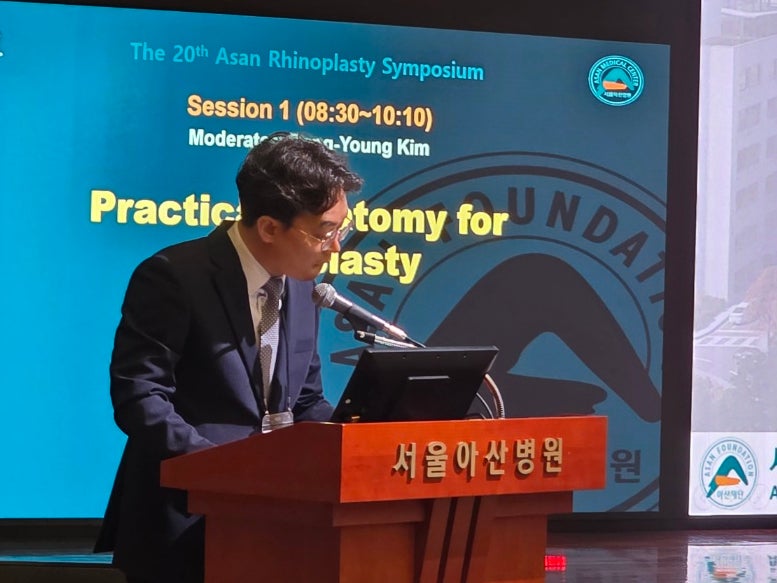
Dr. Lee Young-ha — Career and Credentials |
Board-Certified ENT Specialist |
Intern and Resident, Yeungnam University Hospital |
Clinical Instructor, Asan Medical Center · Yeungnam University Hospital |
Clinical Assistant Professor, Wonju Severance Christian Hospital |
Korean Society of Otorhinolaryngology–Head and Neck Surgery |
Patients who undergo nasal surgery twice share a common trait.
Their first surgery addressed either function or aesthetics — but not both.
This article explains when complications from combined rhinitis surgery and rhinoplasty arise, and under what conditions both goals can be addressed safely.
Many patients have chosen GNG Hospital over the years, and many continue to do so today.
If you are curious why, please read on.
1. What Is Combined Rhinitis Surgery and Rhinoplasty?
Combined rhinitis surgery and rhinoplasty corrects the structural causes of nasal obstruction — such as a deviated septum, nasal valve stenosis, and inferior turbinate hypertrophy — while simultaneously planning for aesthetic improvements.
Although the two procedures may seem separate, the surgical approach is essentially the same.
Correcting the nasal valve requires lifting the skin to access the cartilage.
This is the same route and technique used in open rhinoplasty for cosmetic purposes.
When closing the nose after addressing functional issues, elevating the septum higher simultaneously improves bridge height and tip definition.
2. Combined Rhinitis Surgery and Rhinoplasty: Three Main Types of Complications
There are three types of complications that can occur after combined rhinitis surgery and rhinoplasty.
Type | Primary Cause | Symptoms |
Worsened Breathing | Unassessed nasal valve; implant pressure | Increased nasal congestion after surgery |
Nasal Deformity / Upturned Nose | Excessive septal cartilage resection | Elevated or twisted nasal tip |
Contracture / Inflammation | Foreign body reaction to synthetic implant | Hardened tip, skin tightening |
Of the three, worsened breathing is the most common.
Inserting an implant without first assessing the nasal valve allows the implant's weight to compress the septum, further narrowing the airway — which is why a thorough functional evaluation must precede surgery.
Focusing solely on aesthetics and over-resecting the septal cartilage weakens tip support and can lead to an upturned nasal deformity — so cartilage preservation and reinforcement must be planned together.
3. Why an Upturned Nose Develops After Combined Rhinitis Surgery and Rhinoplasty
Cases of an upturned nose following combined surgery share a consistent pattern.
Functional correction and cosmetic work were each planned separately by different medical teams.
The septal cartilage is the central pillar supporting bridge height and nostril shape.
Resecting more of this pillar than necessary for functional correction can cause the tip to rotate upward or twist.
When contracture develops after implant insertion, the soft tissue shrinks and the upturned appearance worsens.
✔ Situations that increase the risk of an upturned nose
✔ Cartilage preservation was not factored into the surgical plan
✔ Nasal valve status and implant weight were not evaluated beforehand
✔ Functional and cosmetic care were handled by separate teams
4. Combined Rhinitis Surgery and Rhinoplasty: The Procedure for Achieving Both Function and Aesthetics
The reason both function and aesthetics can be addressed in a single procedure is that the surgical approach is identical for each.
Step 1 ▶ Detailed mapping of internal nasal structure using 3D-CT and nasal endoscopy
Step 2 ▶ Diagnosis of functional issues including deviated septum, nasal valve stenosis, and inferior turbinate hypertrophy
Step 3 ▶ Open approach for septal correction and autologous cartilage harvesting
Step 4 ▶ Once the source of obstruction is resolved, elevating the septum to refine tip projection and shape
Step 5 ▶ If needed, reinforcement of tip support using rib or ear cartilage grafts
Rib cartilage, harvested as a straight piece, is well suited for projecting the nose forward in a strong, straight line.
Because it is autologous tissue, it is highly resistant to infection; residual septal cartilage left over after functional correction can be re-shaped and reused for tip rhinoplasty.
5. Recovery Timeline After Combined Rhinitis Surgery and Rhinoplasty
Recovery after combined rhinitis surgery and rhinoplasty typically follows this sequence:
Day of surgery → Hemostasis and splint application
2 weeks post-op → External splint removal; return to daily activities
1 month post-op → Approximately 70% reduction in swelling; initial nasal shape visible
6 months post-op → Final nasal shape fully stabilized
Swelling at the nasal tip tends to persist longer than in other areas.
During recovery, blowing the nose forcefully or applying external pressure can affect nasal structure and should be avoided.
6. How to Choose a Hospital for Combined Rhinitis Surgery and Rhinoplasty
When planning combined rhinitis surgery and rhinoplasty, checking the following points is advisable:
✔ Confirm that the surgical team plans function and aesthetics in an integrated manner
✔ Confirm that pre-operative precision diagnosis is performed using 3D-CT and nasal endoscopy
✔ Confirm that the same physician oversees consultation, surgery, and follow-up care
✔ Confirm that a board-certified anesthesiologist is on-site
Failing to assess the condition of the septum during surgery can lead to mucosal adhesion after implant insertion, further narrowing the nasal valve.
The key is whether an ENT specialist with sufficient functional correction experience is also involved in planning the aesthetic approach.
7. Frequently Asked Questions About Combined Rhinitis Surgery and Rhinoplasty
Q. Does combining rhinitis surgery and rhinoplasty increase the risk of complications?
A. Because the surgical route is the same, integrated planning can actually produce more consistent results than performing the procedures separately. That said, the appropriate approach varies depending on each patient's individual condition.
Q. Is an upturned nose possible after combined rhinitis surgery and rhinoplasty?
A. It can occur when septal cartilage is over-resected or tip support planning is inadequate. Confirming the cartilage preservation plan before surgery is important.
Q. Can breathing worsen after combined rhinitis surgery and rhinoplasty?
A. If the nasal valve is not assessed before surgery, the airway can become even narrower. Pre-operative functional evaluation using nasal endoscopy and 3D-CT is the essential first step in preventing this.
Q. Is autologous cartilage necessary for combined rhinitis surgery and rhinoplasty?
A. Using only a synthetic implant carries a relatively higher risk of contracture and inflammation. Autologous cartilage — septal, ear, or rib — is more resistant to infection and elicits a lower foreign body response, making it a sound option when tip support is needed.
Q. How do I choose a hospital for combined rhinitis surgery and rhinoplasty?
A. Look for a hospital that plans function and aesthetics together, is equipped with precision diagnostic systems, and has the same physician responsible from initial consultation through post-operative care.
Facilities such as GNG Hospital, which handles both ENT functional correction and rhinoplasty, are worth considering.
If you would like to make an appointment, please click below. Thank you!